Visualizzazione post con etichetta In the mood for poetry. Mostra tutti i post

venerdì 26 settembre 2014

Cartoline dal paradiso/4. Equinozio leopardiano

La festa dell'equinozio è stata carina, con letture di poesie, disegni collettivi e un teatro delle ombre. Io ho letto una poesia in italiano e la sua traduzione in inglese. La scelta della poesia è stata facilissima, non ho dovuto pensarci neppure un istante. Era la poesia perfetta per questo paesaggio qui (manca la siepe, ma va bene lo stesso)


Sempre caro mi fu quest’ermo colle,
e questa siepe, che da tanta parte 
dell’ultimo orizzonte il guardo esclude. 
Ma sedendo e mirando, interminati 
spazi di là da quella, e sovrumani 
silenzi, e profondissima quïete 
io nel pensier mi fingo; ove per poco 
il cor non si spaura. E come il vento 
odo stormir tra queste piante, io quello 
infinito silenzio a questa voce 
vo comparando: e mi sovvien l’eterno, 
e le morte stagioni, e la presente 
e viva, e il suon di lei. Così tra questa 
immensità s’annega il pensier mio: 
e il naufragar m’è dolce in questo mare.


This lonely hill was always dear to me, 
and this hedgerow, which cuts off the view 
of so much of the last horizon. 
But sitting here and gazing, I can see 
beyond, in my mind’s eye, unending spaces, 
and superhuman silences, and depthless calm, 
till what I feel 
is almost fear. And when I hear 
the wind stir in these branches, I begin 
comparing that endless stillness with this noise: 
and the eternal comes to mind, 
and the dead seasons, and the present 
living one, and how it sounds. 
So my mind sinks in this immensity: 
and floundering is sweet in such a sea. 
(translated by Jonathan Galassi)


PS: per chi mi chiedeva foto della festa (impossibili per via del buio), ecco una foto astratta di me che leggo Leopardi alla luce di una torcia, scattata dalla co-residente Avantika Bawa.


giovedì 12 dicembre 2013

Happy birthday, Gracie

In ritardo, come al solito, gli auguri a una delle mie donne preferite. 
Una volta le parlai al telefono. Ero nel nord dello stato di New York, non lontano dal Vermont, dove lei viveva. Non ricordo dove trovai il suo numero. Probabilmente le avevo scritto e lei me lo aveva dato. Era il 2003, sono passati dieci anni. Volevo intervistarla, anche se non avevo la più pallida idea di cosa le avrei chiesto. Lei mi disse che mi avrebbe parlato di persona, se fossi andata da lei a Brboro (lo pronunciò così. Ci misi un bel po' a capire che aveva detto Brattleboro). Ero così emozionata che restare al telefono era una sofferenza, e mi affrettai a salutarla. Non riuscii mai ad andare a Brboro. Ma almeno ho sentito la sua voce.

È responsabilità del mondo permettere al poeta di essere poeta
È responsabilità del poeta essere donna
È responsabilità dei poeti mettersi agli angoli delle strade a distribuire e volantini scritti meravigliosamente e anche volantini che si fa fatica a guardare per la forza della loro retorica
È responsabilità del poeta essere pigro, perdere tempo e fare profezie
È responsabilità del poeta non pagare tasse di guerra
È responsabilità del poeta entrare e uscire da torri d’avorio e bilocali sulla e Avenue C, campi di grano saraceno e accampamenti militari
È responsabilità del poeta maschio essere donna
È responsabilità del poeta femmina essere donna
È responsabilità del poeta dire la verità al potente, come affermano i quaccheri
È responsabilità del poeta imparare la verità da chi non ha potere
È responsabilità del poeta ripetere sempre: non esiste libertà senza giustizia, vale a dire giustizia
economica e giustizia in amore

È responsabilità del poeta cantare inni e poemi sulla musica di ogni melodia originale e tradizionale
È responsabilità dei poeti ascoltare ogni diceria e diffonderla come i narratori diffondono la storia della vita
Non esiste libertà senza paura e senza audacia. Non esiste libertà a meno che terra e aria e acqua e sopravvivano e con loro sopravvivano i bambini
È responsabilità del poeta essere donna, non perdere d'occhio il mondo e gridare come fece Cassandra, ma per farsi ascoltare, questa volta.


Grace Paley (11 dicembre 1922 – 22 agosto 2007). Traduzione di Susanna Basso. 
L'originale QUI

giovedì 5 settembre 2013

In the mood for poetry: Lawrence Ferlinghetti

Visto che la breve estate continua ad alimentare la mia insolita simpatia per la città, mi sembra un buon momento per pubblicare un omaggio a San Francisco scritto dal suo poeta più famoso. 


The Changing Light
 
by Lawrence Ferlinghetti

The changing light
                 at San Francisco
       is none of your East Coast light
                none of your
                            pearly light of Paris
The light of San Francisco
                        is a sea light
                                       an island light
And the light of fog
                   blanketing the hills
          drifting in at night
                      through the Golden Gate
                                       to lie on the city at dawn
And then the halcyon late mornings
       after the fog burns off
            and the sun paints white houses
                                    with the sea light of Greece
                 with sharp clean shadows 
                       making the town look like
                                it had just been painted

But the wind comes up at four o'clock
                                     sweeping the hills

And then the veil of light of early evening

And then another scrim
                  when the new night fog
                                        floats in
And in that vale of light
                      the city drifts
                                    anchorless upon the ocean
From How to Paint Sunlight by Lawrence Ferlinghetti


[La traduzione la trovate in questo articolo. Che non dovrei neppure segnalarvi perché il nome del traduttore non è citato, però sarebbe un peccato se non riusciste a leggere la poesia.
Argh. Mi accorgo solo ora che non è neanche tradotta tutta. Comunque l'articolo sui suicidi del Golden Gate è interessante.]


lunedì 10 dicembre 2012

In the mood for poetry: Giorgio Caproni

Litania

Genova mia città intera.
Geranio. Polveriera.
Genova di ferro e aria,
mia lavagna, arenaria.

Genova città pulita.
Brezza e luce in salita.
Genova verticale,
vertigine, aria scale.

Genova nera e bianca.
Cacumine. Distanza.
Genova dove non vivo,
mio nome, sostantivo.

Genova mio rimario.
Puerizia. Sillabario.
Genova mia tradita,
rimorso di tutta la vita.

Genova in comitiva.
Giubilo. Anima viva.
Genova in solitudine,
straducole, ebrietudine.

Genova di limone.
Di specchio. Di cannone.
Genova da intravedere,
mattoni, ghiaia, scogliere.

Genova grigia e celeste.
Ragazze. Bottiglie. Ceste.
Genova di tufo e sole,
rincorse, sassaiole.

Genova tutta tetto.
Macerie. Castelletto.
Genova d'aerei fatti,
Albaro, Borgoratti.

Genova che mi struggi.
Intestini. Caruggi.
Genova e così sia,
mare in un'osteria.

Genova illividita.
Inverno nelle dita.
Genova mercantile,
industriale, civile.

Genova d'uomini destri.
Ansaldo. San Giorgio. Sestri.
Genova in banchina,
transatlantico, trina.
Genova tutta cantiere.
Bisagno. Belvedere.
Genova di canarino,
persiana verde, zecchino.

Genova di torri bianche.
Di lucri. Di palanche.
Genova in salamoia,
acqua morta di noia.

Genova di mala voce.
Mia delizia. Mia croce.
Genova d'Oregina,
lamiera, vento, brina.

Genova nome barbaro.
Campana. Montale, Sbarbaro.
Genova dei casamenti
lunghi, miei tormenti.

Genova di sentina.
Di lavatoio. Latrina.
Genova di petroliera,
struggimento, scogliera.

Genova di tramontana.
Di tanfo. Sottana.
Genova d'acquamarina,
area, turchina.

Genova di luci ladre.
Figlioli. Padre. Madre.
Genova vecchia e ragazza,
pazzia, vaso, terrazza.

Genova di Soziglia.
Cunicolo. Pollame. Trilia.
Genova d'aglio e di rose,
di Pré, di Fontane Masrose.

Genova di Caricamento.
Di Voltri. Di sgomento.
Genova dell'Acquasola,
dolcissima, usignuola.

Genova tutta colore.
Bandiera. Rimorchiatore.
Genova viva e diletta,
salino, orto, spalletta.

Genova di Barile.
Cattolica. Acqua d'Aprile.
Genova comunista,
bocciofila, tempista.
Genova di Corso Oddone.
Mareggiata. Spintone.
Genova di piovasco,
follia, Paganini, Magnasco.

Genova che non mi lascia.
Mia fidanzata. Bagascia.
Genova ch'è tutto dire,
sospiro da non finire.

Genova quarta corda.
Sirena che non si scorda.
Genova d'ascensore,
paterna, stretta al cuore.

Genova mio pettorale.
Mio falsetto. Crinale.
Genova illuminata,
notturna, umida, alzata.

Genova di mio fratello.
Cattedrale. Bordello.
Genova di violino,
di topo, di casino.

Genova di mia sorella.
Sospiro. Maris Stella.
Genova portuale,
cinese, gutturale.

Genova di Sottoripa.
Emporio. Sesso. Stipa.
Genova di Porta Soprana,
d'angelo e di puttana.

Genova di coltello.
Di pesce. Di mantello.
Genova di lampione
a gas, costernazione.

Genova di Raibetta.
Di Gatta Mora. Infetta.
Genova della Strega,
strapiombo che i denti allega.

Genova che non si dice.
Di barche. Di vernice.
Genova balneare,
d'urti da non scordare.

Genova di "Paolo & Lele".
Di scogli. Furibondo. Vele.
Genova di Villa Quartara,
dove l'amore s'impara.
Genova di caserma.
Di latteria. Di sperma.
Genova mia di Sturla,
che ancora nel sangue mi urla.

Genova d'argento e stagno.
Di zanzara. Di scagno.
Genova di magro fieno,
canile, Marassi, Staglieno.

Genova di grige mura.
Distretto. La paura.
Genova dell'entroterra,
sassi rossi, la guerra.

Genova di cose trite.
La morte. La nefrite.
Genova bianca e a vela,
speranza, tenda, tela.

Genova che si riscatta.
Tettoia. Azzurro. Latta.
Genova sempre umana,
presente, partigiana.

Genova della mia Rina.
Valtrebbia. Aria fina.
Genova paese di foglie
fresche, dove ho preso moglie.

Genova sempre nuova.
Vita che si ritrova.
Genova lunga e lontana,
patria della mia Silvana.

Genova palpitante.
Mio cuore. Mio brillante.
Genova mio domicilio,
dove m'è nato Attilio.

Genova dell'Acquaverde.
Mio padre che vi si perde.
Genova di singhiozzi,
mia madre, Via Bernardo Strozzi.

Genova di lamenti.
Enea. Bombardamenti.
Genova disperata,
invano da me implorata.

Genova della Spezia.
Infanzia che si screzia.
Genova di Livorno,
Partenza senza ritorno.

Genova di tutta la vita.
Mia litania infinita.
Genova di stocafisso
e di garofano, fisso
bersaglio dove inclina
la rondine: la rima.


(da Il Passaggio di Enea)

venerdì 26 ottobre 2012

In the mood for poetry/2: José Saramago

Não há mais horizonte                             Non c'è più orizzonte

Não há mais horizonte. Outro passo que desse,      Non c'è più orizzonte. Se dessi un altro passo,
Se o limite não fosse esta ruptura,                         se il limite non fosse la rottura
Era em falso que o dava:                                        sarebbe un passo falso:
Numa baça cortina indivisível                                 in un opaco velo indivisibile                            
De espaço e duração.                                             di spazio e di durata.
Aqui se juntarão as paralelas,                                 Convergeranno qui le parallele,
E as parábolas em rectas se rebatem.                     con parabole e rette che coincidono.
Não há mais horizonte. O silêncio responde.           Non c'è più orizzonte. Il silenzio risponde.
É Deus que se enganou e o confessa.                       È Dio che s'è sbagliato e lo confessa.


José Saramago                                                        traduzione di Fernanda Toriello


In the mood for poetry: Emily Dickinson

The Butterfly upon the Sky
That doesn't know its Name
And hasn't any Tax to pay
And hasn't any Home
Is just as high as you and I,
And higher, I believe,
So soar away and never sigh
And that's the way to grieve -
                                            La farfalla su nel cielo        
                                        che non sa il suo nome
                                        non ha tasse da pagare
                                        né casa a cui tornare
                                        è alta quanto te e me

                                        anzi più alta, direi,
                                        dunque tu innalzati, non sospirare,
                                        è questo il modo di dolersi-


Emily Dickinson                                                                   traduzione di Marisa Bulgheroni

lunedì 9 luglio 2012

In the mood for poetry: Giorgio Caproni

Versicoli quasi ecologici

Non uccidete il mare,
la libellula, il vento.
Non soffocate il lamento
(il canto!) del lamantino.
Il galagone, il pino:
anche di questo è fatto
l’uomo. E chi per profitto vile
fulmina un pesce, un fiume,
non fatelo cavaliere
del lavoro. L’amore
finisce dove finisce l’erba
e l’acqua muore. Dove
sparendo la foresta
e l’aria verde, chi resta
sospira nel sempre più vasto
paese guasto: «Come
potrebbe tornare a esser bella,
scomparso l’uomo, la terra».

(da Res amissa, Garzanti, 1991)

giovedì 14 giugno 2012

"Never let go of that fiery sadness called desire"


Ci sono due musicisti che desidero disperatamente vedere in concerto, e per varie ragioni non ci sono mai riuscita. Uno è il mio amato Tom Waits, e la storia di come perdetti il suo concerto, tanti anni fa, merita forse di essere raccontata, ma non qui, non ora.

L'altra è Patti Smith. Lei, per qualche triste ragione, mi sfugge sempre. Anche quest'estate: lei sarà a Villa Arconati - un posto dove ho visto tanti bellissimi concerti - dopo che io sarò partita per la California, e in novembre sarà in California - nella cittadina di Fairfax che mi è anche particolarmente simpatica - quando io sarò in Italia. Eppure un giorno ce la farò, la vedrò cantare. 

Il suo nuovo album, Banga, è bellissimo. Oggi ho ascoltato Seneca una dozzina di volte. La foto che vedete qui accanto l'ho presa dalla bella voce dell'Enciclopedia delle Donne a lei dedicata.


sabato 24 marzo 2012

Happy Birthday, Mr. Ferlinghetti!

Number 20

The pennycandystore beyond the El
is where I first
fell in love
with unreality
Jellybeans glowed in the semi-gloom
of that september afternoon
A cat upon the counter moved among
the licorice sticks
and tootsie rolls
and Oh Boy Gum

Outside the leaves were falling as they died

A wind had blown away the sun

A girl ran in
Her hair was rainy
Her breasts were breathless in the little room

Outside the leaves were falling
and they cried
Too soon! too soon!


Lawrence Ferlinghetti

(For his "Quote of the day", see here)

sabato 17 marzo 2012

In the mood for poetry: Emily Dickinson


John James Audubon, Anna's Hummingbirds
from
Birds of North America


All the letters I can write
Are not fair as this—
Syllables of Velvet—
Sentences of Plush,
Depths of Ruby, undrained,
Hid, Lip, for Thee—
Play it were a Humming Bird—
And just sipped—me—


Emily Dickinson


venerdì 10 febbraio 2012

Ma qui nessuno conosce De André

Con i miei studenti parliamo spesso di musica italiana, e ormai mi sono fatta una discreta idea di cosa conoscono e apprezzano. C'era la fanatica di Eros Ramazzotti, per esempio. Tutti conoscono Pavarotti, naturalmente, ma anche Andrea Bocelli. E poi Laura Pausini, e un po' di Jovanotti. Molti conoscono Paolo Conte e qualcuno anche Mina. Ma nessuno, nessuno conosce De Andrè. Forse perché, come scrisse Michele Serra "La ballata di Fabrizio": "Detestava la sala d'incisione e ancora più i concerti, ai quali si sottoponeva come a un'interrogazione scolastica sgradita, e solo dopo essersi circondato di musicisti d'eccellenza, come per condividere una pena con amici fidati."   


E allora, per cominciare, ecco Il sogno di Maria.


domenica 13 novembre 2011

In the mood for poetry: Alda Merini

Bambino, se trovi l’aquilone della tua fantasia
legalo con l’intelligenza del cuore.
Vedrai sorgere giardini incantati
e tua madre diventerà una pianta
che ti coprirà con le sue foglie.
Fa delle tue mani due bianche colombe
che portino la pace ovunque
e l’ordine delle cose.
Ma prima di imparare a scrivere
guardati nell’acqua del sentimento.

mercoledì 26 ottobre 2011

In the mood for poetry: Andrea Zanzotto

Per salutare un grande poeta.

Così siamo

Dicevano, a Padova, «anch'io»
gli amici «l'ho conosciuto».
E c'era il romorio d'un'acqua sporca
prossima, e d'una sporca fabbrica:
stupende nel silenzio.
Perché era notte. «Anch'io
l'ho conosciuto.»
Vitalmente ho pensato
a te che ora
non sei né soggetto né oggetto
né lingua usuale né gergo
né quiete né movimento
neppure il né che negava
e che per quanto s'affondino
gli occhi miei dentro la sua cruna
mai ti nega abbastanza.

E così sia: ma io
credo con altrettanta
forza in tutto il mio nulla,
perciò non ti ho perduto
o, più ti perdo e più ti perdi,
più mi sei simile, più m'avvicini.

(Da IX Ecloghe, 1962)

martedì 11 ottobre 2011

In the mood for poetry: Nazim Hikmet

Mosca, 1961

Le sedie dormono in piedi
anche il tavolo
il tappeto sdraiato sul dorso
ha chiuso gli arabeschi
lo specchio dorme
gli occhi delle finestre sono chiusi
il balcone dorme
con le gambe penzolanti nel vuoto
i camini sul tetto dirimpetto dormono
sui marciapiedi dormono le acacie
la nuvola dorme
stringendosi al petto una stella
in casa fuori di casa dorme la luce

ma tu ti sei svegliata

mia rosa
le sedie si sono svegliate
si precipitano da un angolo all’altro anche il tavolo
il tappeto si è messo a sedere
gli arabeschi hanno aperto i petali
lo specchio si è risvegliato come un lago all’aurora
le finestre hanno spalancato
immensi occhi azzurri
il balcone si è risvegliato
ha tirato su dal vuoto le gambe
i camini dirimpetto si son messi a fumare
le acacie han cominciato a chiacchierare
sui marciapiedi
la nuvola si è svegliata
ha lanciato la sua stella nella nostra stanza
in casa fuori di casa la luce si è risvegliata
si è versata sui tuoi capelli
è colata tra le tue palme
ha cinto la tua vita nuda i tuoi piedi bianchi.

Traduzione di Joyce Lussu

venerdì 12 agosto 2011

In the mood for poetry: Philip Levine

Philip Levine, "known for his emphasis on the voice of the ordinary workingman and the industrial heartland" (as Dwight Garner writes on the NYT), is the new Poet Laureate of America.

And, according to the NYT, "Americans are rushing to read poetry". "One day after Philip Levine was named the next poet laureate, his books have quickly sold out (...) making it nearly impossible to immediately acquire copies of some collections of his poems. On the Amazon.com 'Movers and Shakers' list, which tracks books that are growing the most quickly in popularity, two by Mr. Levine were at the top of the list: 'What Work Is', a collection of poems that won a National Book Award, and 'The Simple Truth', a collection that won a Pulitzer Prize".

Here's one of my favourite poems of his.

The Simple Truth

I bought a dollar and a half's worth of small red potatoes,
took them home, boiled them in their jackets
and ate them for dinner with a little butter and salt.

Then I walked through the dried fields
on the edge of town. In middle June the light
hung on in the dark furrows at my feet,
and in the mountain oaks overhead the birds
were gathering for the night, the jays and mockers
squawking back and forth, the finches still darting
into the dusty light. The woman who sold me
the potatoes was from Poland; she was someone
out of my childhood in a pink spangled sweater and sunglasses
praising the perfection of all her fruits and vegetables
at the road-side stand and urging me to taste
even the pale, raw sweet corn trucked all the way,
she swore, from New Jersey. "Eat, eat" she said,
"Even if you don't I'll say you did."
Some things
you know all your life. They are so simple and true
they must be said without elegance, meter and rhyme,

they must be laid on the table beside the salt shaker,
the glass of water, the absence of light gathering
in the shadows of picture frames, they must be
naked and alone, they must stand for themselves.
My friend Henri and I arrived at this together in 1965
before I went away, before he began to kill himself,
and the two of us to betray our love. Can you taste
what I'm saying? It is onions or potatoes, a pinch
of simple salt, the wealth of melting butter, it is obvious,
it stays in the back of your throat like a truth
you never uttered because the time was always wrong,
it stays there for the rest of your life, unspoken,
made of that dirt we call earth, the metal we call salt,
in a form we have no words for, and you live on it. 


And here's another one:

The Fox

I think I must have lived
Once before, not as a man or woman
But as a small, quick fox pursued
Through fields of grass and grain
By ladies and gentlement on horseback.
This would explain my nose
And the small dark tufts of hair
That rise from the base of my spine.
It would explain why I am
So seldom invited out to dinner
And when I am I am never
Invited back. It would explain
My loathing for those on horseback
In Central Park and how I can
So easily curse them and challenge
The men to fight and why no matter
How big they are or how young
They refuse to dismount,
For at such times, rock in hand,
I must seem demented.
My anger is sudden and total,
For I am a man to whom anger
Usually comes slowly, spreading
Like a fever along my shoulders
And back and turning my stomach
To a stone, but this fox anger
Is lyrical and complete, as I stand
In the pathway shouting and refusing
To budge, feeling the dignity
Of the small creature menaced
By the many and larger. Yes,
I must have been that unseen fox
Whose breath sears the thick bushes
And whose eyes burn like opals
In the darkness, who humps
And shits gleefully in the horsepath
Softened by moonlight and goes on
Feeling the steady measured beat
Of his fox heart like a wordless
Delicate song, and the quick forepaws
Choosing the way unerringly
And the thick furred body following
While the tail flows upward,
Too beautiful a plume for anyone
Except a creature who must proclaim
Not ever ever ever
To mounted ladies and their gentlemen.


giovedì 19 maggio 2011

E. E. Cummings & Mary De Rachewiltz

Un grande poeta merita una grande traduttrice. Ho sempre guardato con venerazione alla
traduzione delle poesie di E. E. Cummings da parte di Mary De Rachewiltz. Un piccolo
miracolo. Cummings era molto amico di Ezra Pound e di sua figlia Mary, come testimoniato,
fra l'altro, dalle lettere in cui il poeta commenta in tono affettuoso e confidenziale il lavoro
di traduzione delle sue opere.
Questa è una delle mie poesie preferite di Cummings, accompagnata, naturalmente, dalla
sua splendida traduzione.
  
may my heart always be open to little
birds who are the secrets of living
whatever they sing is better than to know
and if men should not hear them men are old
   
may my mind stroll about hungry
and fearless and thirsty and supple
and even if it's sunday may i be wrong
for whenever men are right they are not young
   
and may myself do nothing usefully
and love yourself so more than truly
there's never been quite such a fool who could fail
pulling all the sky over him with one smile


           sempre sia il mio cuore aperto ai piccoli
           uccelli che sono il segreto del vivere
           qualsiasi loro canto è meglio del sapere
           e gli uomini che non li sentono sono vecchi

           sempre la mia mente vaghi affamata
           intrepida assetata e agile
           e anche s'è domenica il torto sia mio
           ché se la gente ha ragione non è giovane
                                                           
e che io non faccia mai nulla di utile
e il mio amore per te sia più che sincero
perché nessuno giammai fu così stolto
da non attirarsi con un sorriso il cielo


martedì 3 maggio 2011

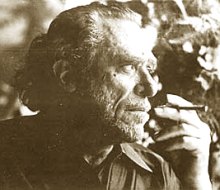
In the mood for poetry: Tom Waits and Charles Bukowski

Here's my beloved Tom Waits reading a beautiful poem by Charles Bukowski, Nirvana.


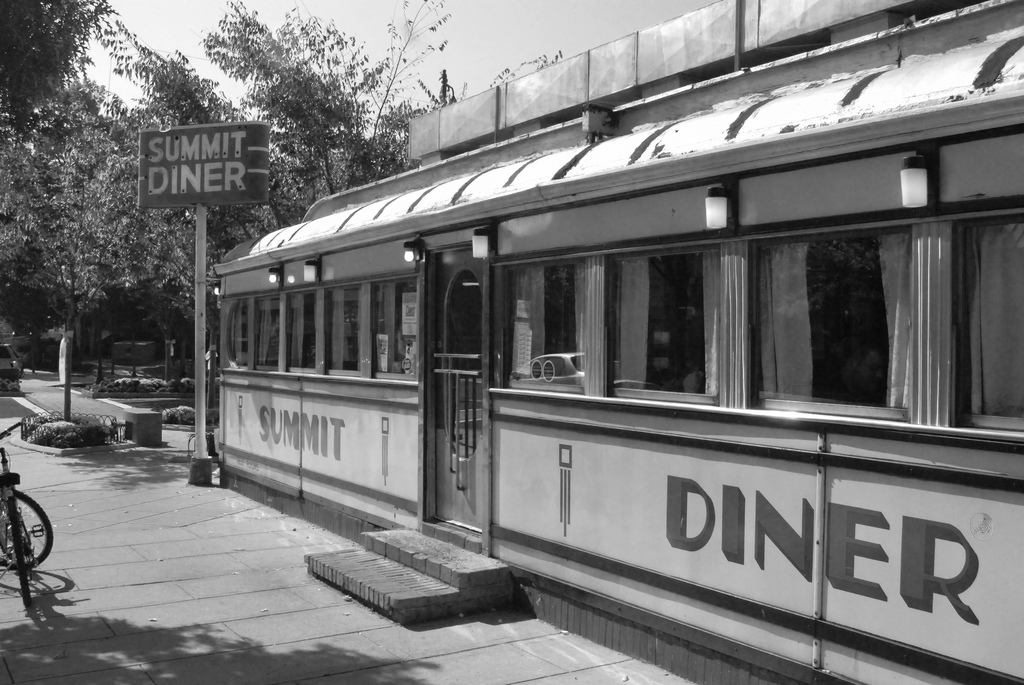
he found his seat
and looked at the cafe
through the bus
window.
then the bus moved
off, down a curve,
downward, out of
the hills.
the young man
looked straight
foreward.
he heard the other
passengers
speaking
of other things,
or they were
reading
or
attempting to
sleep.
they had not
noticed
the
magic.
the young man
put his head to
one side,
closed his
eyes,
pretended to
sleep.
there was nothing
else to do-
just to listen to the
sound of the
engine,
the sound of the
tires
in the
snow.
- Charles Bukowski
"Nirvana"
not much chance,
completely cut loose from
purpose,
he was a young man
riding a bus
through North Carolina
on the way to somewhere
and it began to snow
and the bus stopped
at a little cafe
in the hills
and the passengers
entered.
he sat at the counter
with the others,
he ordered and the
food arrived.
the meal was
particularly
good
and the
coffee.
the waitress was
unlike the women
he had
known.
she was unaffected,
there was a natural
humor which came
from her.
the fry cook said
crazy things.
the dishwasher.
in back,
laughed, a good
clean
pleasant
laugh.
the young man watched
the snow through the
windows.
he wanted to stay
in that cafe
forever.
the curious feeling
swam through him
that everything
was
beautiful
there,
that it would always
stay beautiful
there.
then the bus driver
told the passengers
that it was time
to board.
the young man
thought, I'll just sit
here, I'll just stay
here.
but then
he rose and followed
the others into the
bus.


If you liked it and you want more, here's Bukowski reading Bukowski.